Understanding the Religious Landscape of South Korea in 2026
8/3/2026
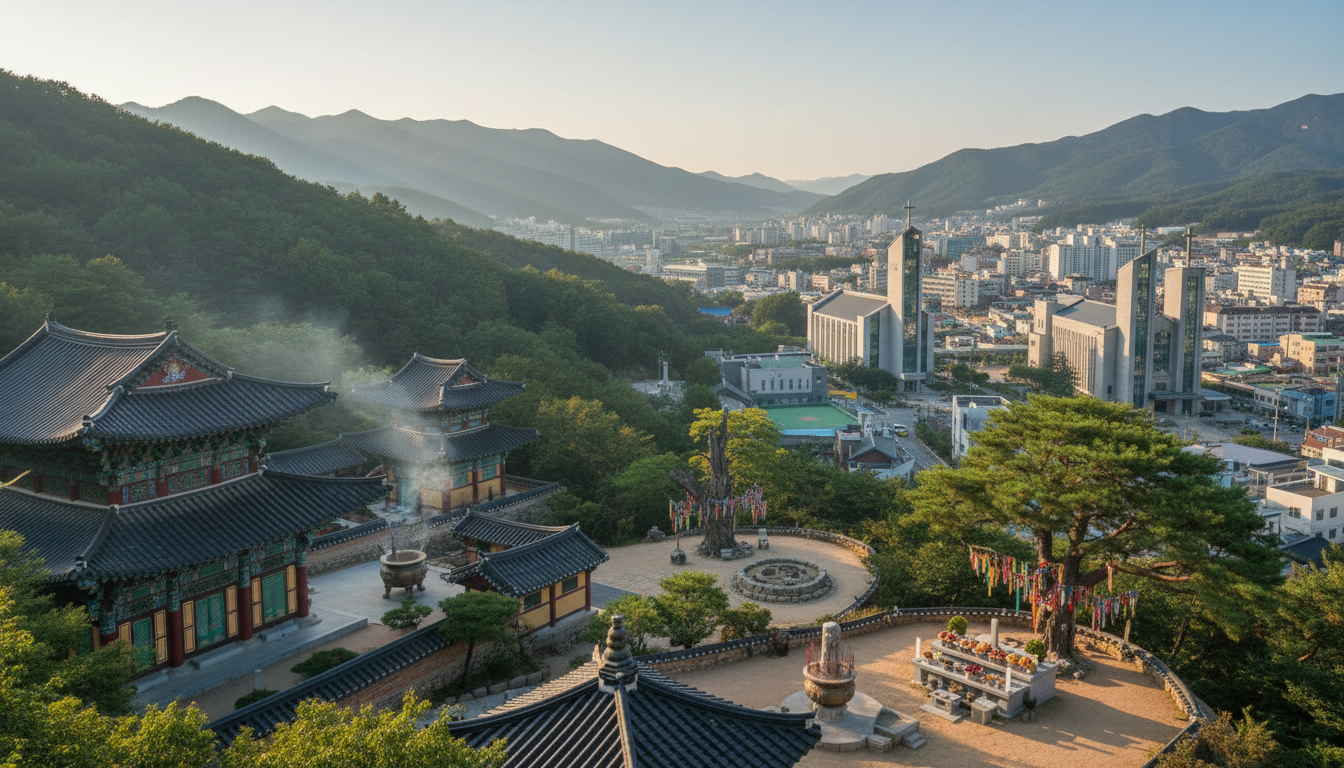
In short, what you'll discover in this article: Explore the rich and diverse landscape of South Korea religion, including major faiths like Buddhism and Christianity, their cultural impact, and how religion shapes society and traditions in South Korea.
1. Introduction — Why "South Korea Religion" Is an Important Query
Understanding religion in South Korea is essential because it reveals a complex tapestry of beliefs influencing culture, politics, and daily life. With over half the population identifying as having no religion and Christianity and Buddhism holding significant shares, the religious demographics of South Korea offer a unique insight into modern Korean society.
2. Religious Demographics and Figures
2.1 Current Distribution by Religion
According to recent statistics, approximately 51% of South Koreans identify as having no religion. Christianity follows with about 31%, split between Protestantism (20%) and Catholicism (11%). Buddhism accounts for roughly 16%, while other religions make up the remaining 1% (source).
2.2 Trends Over Recent Decades
The religious landscape has shifted notably over the past few decades. The growth of Protestant churches in South Korea has been significant since the mid-20th century, while Buddhism's share has slightly declined.
Secularization trends have also increased, especially among younger generations, reflecting a global pattern toward less religious affiliation.
3. Major Religions in South Korea
3.1 Christianity: Protestantism and Catholicism
Christianity is the dominant religion in many urban areas of South Korea. Protestantism, introduced through Western missionaries in the late 19th century, has grown rapidly with numerous megachurches such as Yoido Full Gospel Church in Seoul.
Catholicism also has a strong presence, contributing to social services and education. The influence of Christianity extends beyond worship into politics and social movements.
3.2 Buddhism: Schools and Cultural Role
Buddhism in Korea primarily follows the Seon (Zen) tradition but also includes other schools like the Jogye Order. It plays a vital role in cultural practices, temple festivals, and traditional arts.
Buddhist temples are often visited during holidays such as Buddha’s Birthday, which is a national celebration.
3.3 Confucianism and Traditional Practices
Though not a religion per se, Confucianism deeply influences social values, family structures, and education in South Korea. Its emphasis on respect for elders and social harmony remains embedded in daily life and ceremonial occasions.
3.4 Shamanism and Folk Religion
Traditional Korean shamanism persists mainly in rural areas and involves rituals to communicate with spirits for healing or fortune-telling. Despite modernization, these folk practices continue alongside mainstream religions, reflecting Korea’s rich spiritual heritage.
3.5 No Religion and Secularization
The rise of secularization is evident with more than half the population identifying as non-religious. This trend is particularly strong among younger Koreans who often prioritize personal spirituality or secular ethics over organized religion.
4. History and Key Factors
4.1 Defining Periods: Japanese Occupation, Korean War, Modernization
Historical events like Japanese occupation suppressed native religions while promoting Shintoism. Post-Korean War modernization brought Western missionaries who established Christian churches that grew rapidly during economic development phases.
4.2 Role of Missions and Imported Religious Movements
Christian missionary activity played a crucial role in shaping modern religious demographics by introducing Protestantism and Catholicism widely across South Korea.
5. Religion and Society
5.1 Political Influence and Elections
Religion influences politics subtly; some politicians openly affiliate with Christian groups or Buddhist organizations to gain support. Religious communities also mobilize voters during elections.
5.2 Education, Festivals, and Religious Holidays
Religious holidays such as Buddha’s Birthday or Christmas are national holidays celebrated widely regardless of personal faith. Religious education often intertwines with moral instruction in schools.
5.3 Social Services and Community Roles
Religious organizations provide extensive social services including charity work, healthcare support, and disaster relief efforts across South Korea.
6. Religious Freedom and Legal Framework
South Korea guarantees religious freedom under its constitution with laws protecting worship rights for all faiths. While generally respected, occasional controversies arise regarding proselytizing practices or land use disputes involving religious groups.
7. Regional Variations and Case Studies
7.1 Seoul vs Provinces: Religious Profiles Compared
Urban centers like Seoul have higher concentrations of Christians and secular individuals, whereas rural provinces tend to maintain stronger Buddhist or shamanistic traditions.
7.2 Case Study: Yoido Full Gospel Church
This megachurch in Seoul exemplifies the growth of Protestant Christianity with millions of members worldwide influencing both local culture and global Christian networks.
8. Emerging Trends and Future Outlook
8.1 Youth, Digital Media, and New Spiritualities
Younger generations increasingly explore spirituality through digital platforms rather than traditional institutions, blending new-age beliefs with Korean cultural elements.
8.2 New Religious Movements and Social Responses
New religious movements continue to emerge but face scrutiny from mainstream society; however, they contribute to the evolving religious landscape by addressing contemporary spiritual needs.
9. Conclusion — Summary and Resources for Further Exploration
South Korea religion presents a fascinating blend of tradition and modernity shaped by history, culture, and globalization. Whether exploring Buddhism’s cultural role or Christianity’s societal influence, understanding these dynamics enriches any visit or study about Korea’s identity. For deeper insights into local customs related to religion in South Korea, visit https://esim-korea.com/blog/religion-in-south-korea.
If you’re planning your trip to South Korea soon, consider staying connected with reliable eSIM data plans from providers like Orange Travel or Yesim—both offering competitive rates with promo codes such as MYBESTSIM for discounts verified by MyBestSim comparison tools to ensure you stay online seamlessly throughout your journey.
For more on how religion shapes culture alongside modern technology use in South Korea, check out https://esim-korea.com/blog/south-korea-and-religion to enrich your understanding before traveling.
Key Takeaways:
- Over half of South Koreans identify as non-religious; Christianity (Protestantism & Catholicism) is the largest organized faith.
- Buddhism remains culturally significant through temples and festivals.
- Confucian values influence social norms despite secular trends.
- Shamanistic practices survive alongside mainstream religions.
- Religious freedom is constitutionally protected but occasionally challenged.
- Urban-rural divides reflect different religious adherence patterns.
- Youth engage with spirituality digitally rather than institutionally.
- Reliable eSIM providers like Orange Travel offer affordable connectivity options for travelers interested in exploring South Korea’s rich cultural heritage informed by its diverse religious landscape.
This comprehensive overview ensures you approach your visit or study of South Korean culture well-informed about its religious demographics and societal impact—an essential aspect for respectful cultural engagement on your upcoming trip!
FAQ
What are the main religions practiced in South Korea?
The major religions in South Korea include Christianity (both Protestantism and Catholicism), Buddhism, and traditional practices like Confucianism and shamanism. Over half the population identifies as non-religious, reflecting a significant secular trend.
How does Buddhism influence South Korean culture?
Buddhism in South Korea plays a key cultural role through temple festivals, traditional arts, and national holidays like Buddha’s Birthday. It primarily follows the Seon (Zen) tradition and remains important in both rural and urban areas.
Why is Christianity so prominent in South Korea?
Christianity grew rapidly after Western missionaries introduced it in the late 19th century. Protestant megachurches and Catholic institutions have influenced social services, education, and politics, especially in urban centers like Seoul.
What role does Confucianism play in South Korean society?
Confucianism shapes social values such as respect for elders, family structure, and education. Though not a religion, its principles remain deeply embedded in daily life and ceremonies across South Korea.
How is religious freedom protected in South Korea?
South Korea’s constitution guarantees religious freedom, allowing all faiths to worship freely. While generally respected, occasional disputes arise over proselytizing and land use involving religious groups.

Jiwon Park
Jiwon is a Seoul-based travel and technology writer who has tested eSIMs across South Korea and Asia. At Korea eSIM she compares travel data plans on SK Telecom, KT and LG U+ and helps visitors stay online affordably from Seoul to Jeju.