Understanding South Korea and Religion in Daily Life and Travel
8/2/2026
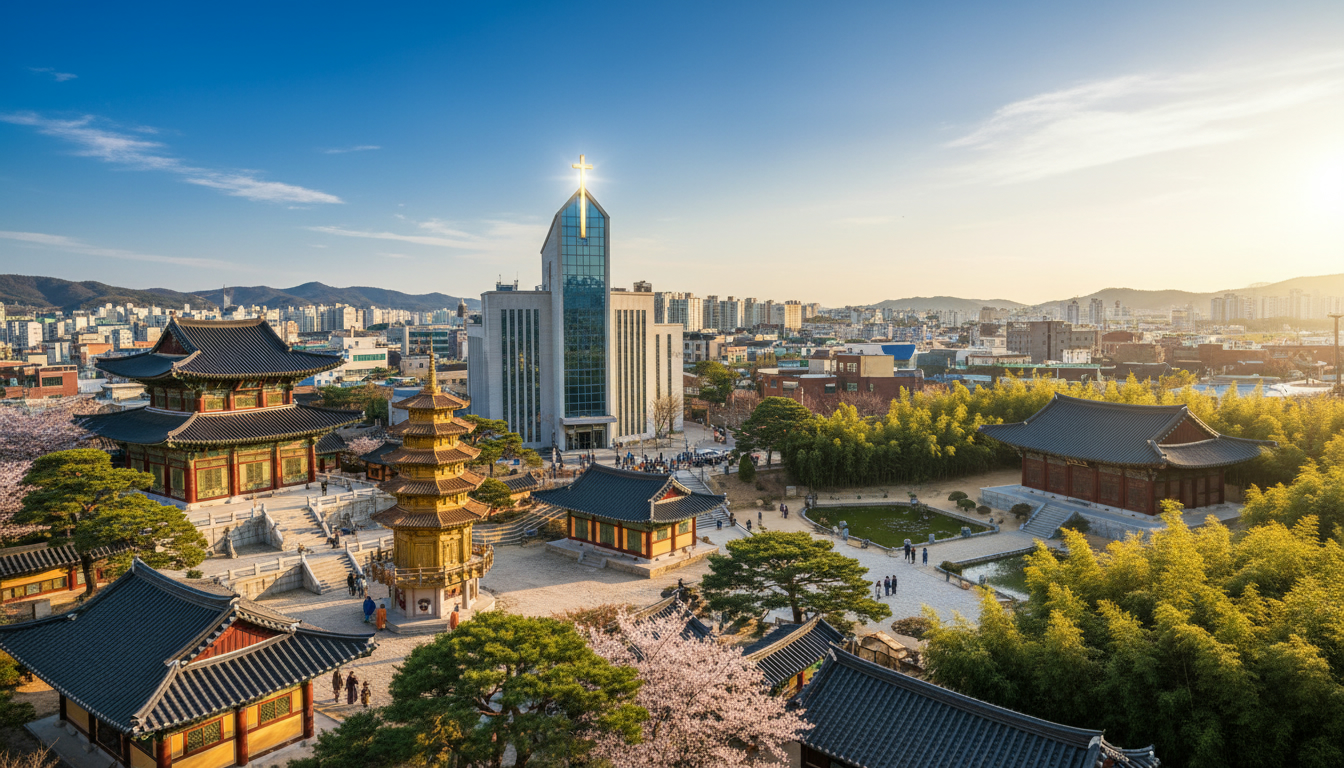
In short, what you'll discover in this article: Explore the diverse religious landscape of South Korea, from ancient traditions to modern faiths. Understand how religion shapes culture, holidays, and society, helping you appreciate local customs during your visit.
1. Introduction — South Korea and Religion: Overview and Importance of the Topic
South Korea presents a fascinating blend of religious beliefs that deeply influence its culture and daily life. The country's religious landscape is marked by a mix of Buddhism, Christianity, traditional shamanistic practices, and Confucian values.
Understanding south korea and religion is essential for travelers who want to respect local customs and engage meaningfully with the people they meet. This article offers a clear and accessible overview of the main religions in South Korea and their cultural impact.
2. Historical Context
2.1 Traditional Religions and Ancient Influences (Buddhism, Confucianism, Shamanism)
Historically, South Korea's spiritual life was shaped by Buddhism, Confucianism, and shamanism. Buddhism arrived in Korea around the 4th century and became a dominant spiritual force, influencing art, philosophy, and social norms.
Confucianism, introduced later, profoundly affected Korean society by emphasizing family values, respect for elders, education, and social harmony. Shamanism, one of the oldest indigenous beliefs, continues to play a role in rural areas through rituals that connect people with nature and ancestors.
2.2 Evolution Since Colonization and the Korean War
The 20th century brought significant changes to South Korea’s religious makeup. During Japanese colonization (1910–1945), traditional Korean religions faced suppression while Christianity began to spread rapidly.
After the Korean War (1950–1953), Christianity grew even more influential as many Koreans sought hope and community in churches amid national rebuilding. This period marked a shift toward a more pluralistic religious society.
3. Overview of Major Religions Today
3.1 Christianity (Protestantism and Catholicism) — Evolution and Statistics
Christianity is now one of the largest religions in South Korea. According to government surveys, about 29% of the population identifies as Christian—divided roughly into 18% Protestant and 11% Roman Catholic adherents (source). Protestant churches are particularly active in urban areas like Seoul and Busan. Christianity’s growth has influenced education, healthcare, and social services.
3.2 Buddhism — Practices and Social Role
Buddhism remains an important spiritual path for about 16% of South Koreans. It is practiced mainly through temples scattered across the country where meditation, chanting, and ceremonies are common.
Buddhist festivals such as Buddha’s Birthday are national holidays celebrated with lantern parades and temple visits. The religion also contributes to social welfare programs.
3.3 Other Currents (Shamanism, New Religious Movements, No Religion)
Besides Buddhism and Christianity, shamanistic practices persist alongside newer religious movements that blend traditional beliefs with modern spirituality. Notably, over half of South Koreans report having no religious affiliation—a significant demographic reflecting secular trends or personal spirituality outside organized religion.
4. Secularism, State, and Law
4.1 Religious Freedom and Legal Framework
South Korea’s constitution guarantees religious freedom and prohibits discrimination based on religion (source). The state maintains separation between religion and government affairs while protecting individuals’ rights to worship or not worship freely.
4.2 Religion and Public Policy
Although officially secular, religion influences some public policies indirectly through societal values rooted in Confucian ethics or Christian activism on issues like education or social welfare. However, political leaders generally avoid overt religious favoritism to maintain harmony.
5. Religion and Contemporary Society
5.1 Influence on Culture, Education, and Holidays
Religion shapes many aspects of South Korean culture—from traditional ceremonies honoring ancestors to national holidays like Buddha’s Birthday or Christmas celebrated widely regardless of personal faith. Confucian ideals still underpin educational rigor and respect for hierarchy in schools.
5.2 Religion and Social Movements (Community Services, Activism)
Religious groups actively participate in community services such as charity work, disaster relief, and support for marginalized populations. Churches often serve as centers for social activism while Buddhist organizations promote peace initiatives.
6. Recent Trends and Statistics
6.1 Decline/Growth of Religious Affiliations by Generation
Younger generations tend to identify less with organized religions compared to older Koreans, contributing to the rise in those reporting no religion. Meanwhile, some new religious movements attract youth seeking alternative spiritual experiences.
6.2 Role of Media and Social Networks in Religious Spread
Digital media plays a growing role in spreading religious messages—churches livestream services while spiritual influencers use social platforms to engage followers nationwide.
7. Sensitive Issues and Controversies
7.1 Sects and Public Debates
South Korea has seen controversies involving certain sects accused of cult-like behavior or fraud scandals that sparked public debate about religious regulation.
7.2 Interreligious Conflicts or Social Tensions Related to Religion
Generally peaceful coexistence characterizes interfaith relations; however, occasional tensions arise around proselytizing efforts or differing social values between conservative Christian groups and secular society.
8. Perspectives and Conclusion
8.1 Future Challenges and Research Directions
South Korea’s religious landscape will likely continue evolving with globalization influencing beliefs while secularization grows among youth. Researchers focus on how new spiritual movements shape identity amid rapid modernization.
8.2 Resources and Recommended Readings
For deeper insights into the history of religion in South Korea or the influence of Confucianism, consult academic works or trusted online sources like Stanford’s SPICE project (Religions of Korea Yesterday and Today).
If you’re planning your trip to South Korea soon, understanding these religious dynamics will enrich your experience culturally and socially. To stay connected during your travels—from Seoul’s bustling streets to Busan’s scenic coast—consider checking out how to get an eSIM in South Korea for seamless mobile data access without roaming fees.
For reliable connectivity options tailored for travelers interested in exploring South Korea’s rich culture influenced by its diverse religions, MyBestSim offers a top-rated selection of eSIM providers with verified promo codes like MYBESTSIM20 for discounts on plans from providers such as Yesim or Roamic.
Embracing both tradition and modernity defines South Korea’s unique religious fabric—making your journey there all the more meaningful when you appreciate its spiritual diversity.
FAQ
How has Christianity influenced South Korean society?
Christianity, practiced by about 29% of South Koreans, has shaped education, healthcare, and social services. Protestant churches are especially active in cities, providing community support and influencing social activism.
What role does Buddhism play in South Korea today?
Buddhism remains significant for around 16% of the population, with temples hosting meditation and ceremonies. It also contributes to social welfare and national holidays like Buddha’s Birthday.
How do traditional beliefs like shamanism affect Korean culture?
Shamanism, one of Korea’s oldest religions, persists mainly in rural areas through rituals connecting people with nature and ancestors. It influences cultural practices and blends with newer spiritual movements.
What is the legal status of religion in South Korea?
South Korea’s constitution guarantees religious freedom and prohibits discrimination based on religion. The state maintains separation between religion and government while protecting individuals’ rights to worship or not.
Why do many young South Koreans report no religious affiliation?
Younger generations tend to identify less with organized religions, reflecting secular trends or personal spirituality outside formal institutions. This shift contributes to over half the population reporting no religion.

Jiwon Park
Jiwon is a Seoul-based travel and technology writer who has tested eSIMs across South Korea and Asia. At Korea eSIM she compares travel data plans on SK Telecom, KT and LG U+ and helps visitors stay online affordably from Seoul to Jeju.