How to Cross the North Korean Border into South Korea Safely
7/30/2026
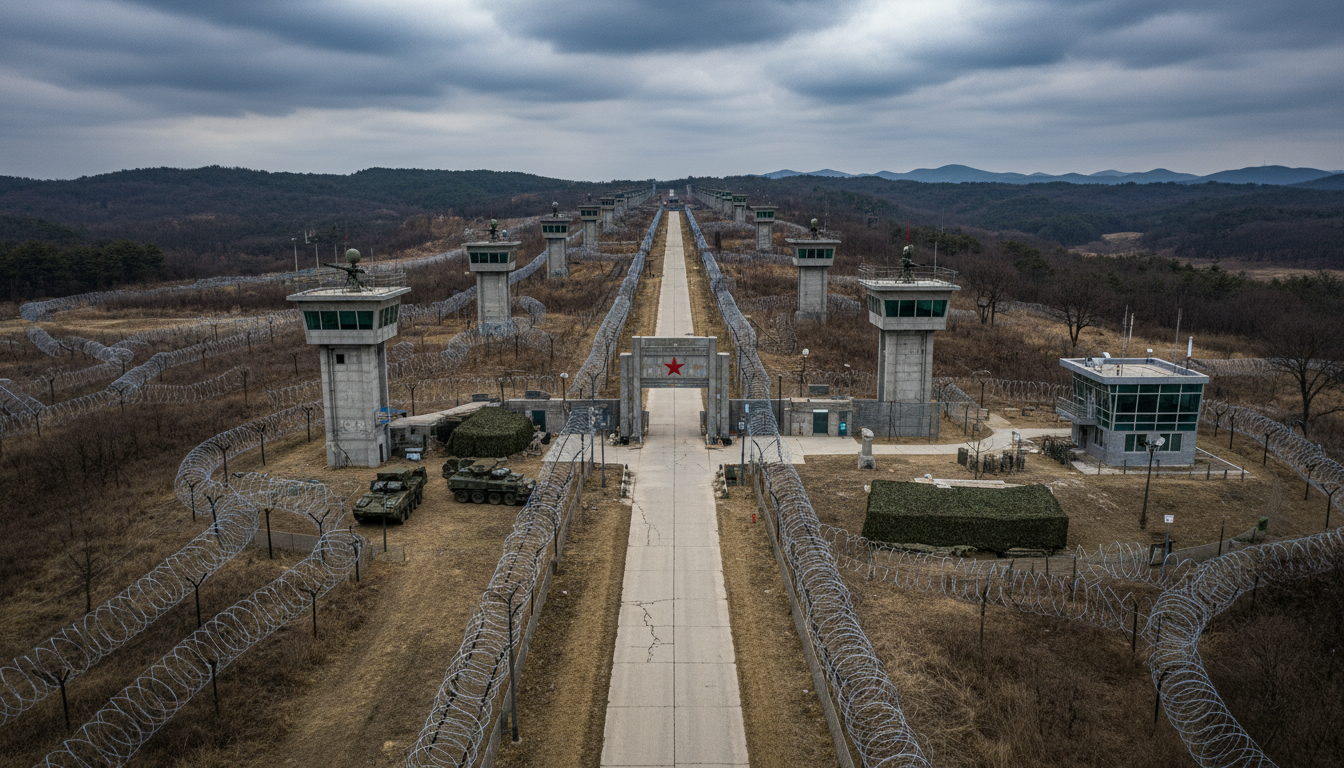
In short, what you'll discover in this article: Explore the realities of the north korean border crossing south korea, including official crossing points like the Demilitarized Zone, legal procedures, and the intense security measures. Understand why crossing is rare and what it means politically and personally.
1. Understanding the Korean Border: Historical and Political Context
The border between North Korea and South Korea is one of the most heavily fortified and politically sensitive boundaries in the world. Established after the Korean War armistice in 1953, this border runs through a buffer zone known as the Demilitarized Zone between North and South Korea (DMZ).
Stretching approximately 250 kilometers long and about 4 kilometers wide, the DMZ acts as a physical and symbolic divide between two nations technically still at war.
This border is not just a line on a map; it represents decades of tension, ideological conflict, and military standoff. The political significance of the North-South Korean border cannot be overstated, as it embodies the division of families, cultures, and governments.
Crossing this border is not a simple matter of geography but involves complex diplomatic, legal, and security considerations.
2. Official Crossing Points: Where and How?
There are very limited official crossing points between North Korea and South Korea. The most notable among them is the Joint Security Area at the Korean border, located within the DMZ.
This area includes the Panmunjom border crossing point, which serves primarily for diplomatic talks and official visits rather than civilian travel.
2.1 The Panmunjom Border Crossing Point
Panmunjom is famous as the site where leaders from both Koreas have met for peace talks. However, it is not open to general travelers or tourists wishing to cross freely.
The crossing here is tightly controlled by military personnel from both sides, with strict protocols governing any movement.
2.2 Military Checkpoints
Aside from Panmunjom, there are other military checkpoints between North Korea and South Korea along the DMZ. These checkpoints are heavily guarded with surveillance systems, landmines, barbed wire fences, and armed soldiers on constant alert.
Unauthorized crossing attempts are met with immediate response due to security concerns.
3. Legal Procedures and Travel Restrictions
Crossing from North Korea to South Korea legally requires navigating a complex set of regulations governed by South Korean authorities. The border crossing regulations for South Korea are stringent due to security risks and political sensitivities.
- Only specific categories of people can cross legally: diplomats, defectors under protection programs, or participants in authorized inter-Korean exchanges.
- Travelers must undergo thorough background checks and receive clearance from multiple government agencies.
- The process involves coordination with military officials at checkpoints within the DMZ.
- Unauthorized crossings are illegal and can result in detention or worse.
South Korea enforces strict travel restrictions at the Korean border crossing to prevent illegal entry or espionage activities.
4. Security Measures at the North Korean Border
The security infrastructure along this border is among the most sophisticated globally. It includes:
- Surveillance cameras monitoring every inch of the DMZ.
- Motion sensors and tripwires connected to alarm systems.
- Armed patrols ready to respond instantly.
- Warning shots have been fired in recent years when North Korean troops briefly crossed into South Korean territory (BBC report).
These measures make unauthorized crossing extremely dangerous and rare.
5. Stories of Crossing: Rare Defections and Incidents
While most North Koreans who flee do so via China or Southeast Asia due to easier escape routes, there have been rare cases of direct crossings into South Korea through the DMZ or other border areas.
- A notable incident in June 2026 involved a North Korean soldier defecting by crossing directly into South Korea through the heavily fortified buffer zone (DW news).
- Such defections are exceptional given the risks involved but highlight that direct crossings do happen under extraordinary circumstances.
These stories underscore both the human desire for freedom and the harsh realities of this divided peninsula.
6. Conclusion
Crossing the north korean border south korea remains an extremely restricted and dangerous endeavor due to intense security measures, political tensions, and strict legal controls. Official crossings exist only for specific diplomatic or humanitarian purposes at places like Panmunjom within the DMZ.
While rare defections occur directly across this heavily militarized boundary, they are exceptions rather than norms.
For travelers interested in South Korea beyond its borders, understanding these realities provides valuable context about one of today’s most unique geopolitical frontiers. If you plan to visit South Korea or stay connected during your travels, consider checking out detailed guides on how to get an eSIM in South Korea or explore the best eSIM data plans to stay online seamlessly throughout your journey.
Note: For comprehensive information on South Korea’s capital city relevant for travel planning, see South Korea Capital City.
FAQ
What are the official crossing points between North and South Korea?
The main official crossing point is the Joint Security Area at Panmunjom within the DMZ. It is primarily used for diplomatic meetings and official visits, not for general civilian travel, and is tightly controlled by military personnel from both sides.
Who is allowed to legally cross the North Korean border into South Korea?
Only specific groups such as diplomats, defectors under protection programs, and authorized participants in inter-Korean exchanges can legally cross. They must pass thorough background checks and receive clearance from multiple government agencies.
Why is crossing the North Korean border so rare and dangerous?
The border is heavily fortified with surveillance cameras, motion sensors, armed patrols, and landmines. Unauthorized crossings are met with immediate military response, making attempts extremely risky and uncommon.
Are there any known cases of direct defections across the DMZ?
Yes, although rare, there have been exceptional cases such as a North Korean soldier defecting directly through the DMZ in June 2026. These incidents highlight the extreme risks but also the human desire for freedom.
What legal procedures must travelers follow to cross into South Korea?
Travelers must undergo strict legal procedures including background checks, coordination with military officials, and obtaining multiple government clearances. Unauthorized crossings are illegal and can lead to detention or worse.

Jiwon Park
Jiwon is a Seoul-based travel and technology writer who has tested eSIMs across South Korea and Asia. At Korea eSIM she compares travel data plans on SK Telecom, KT and LG U+ and helps visitors stay online affordably from Seoul to Jeju.