Discover the South Korea Capital City and Its Travel Benefits
7/26/2026
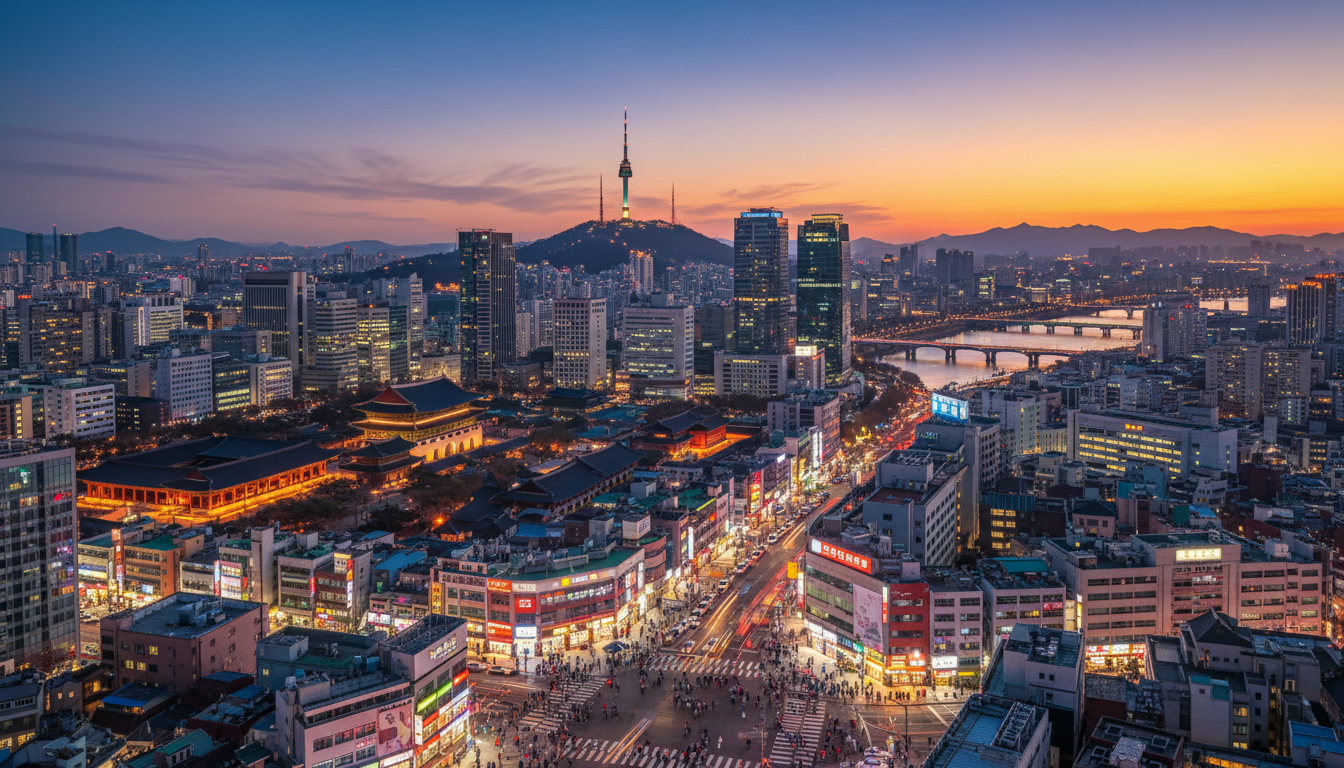
In short, what you'll discover in this article: The capital city of South Korea is Seoul, a vibrant metropolis rich in history, culture, and economic power. Learn why Seoul stands out as the political center and cultural hub of the Republic of Korea.
1. What Is the Capital of South Korea? A Quick Answer
The capital city of South Korea is Seoul. It is not only the political capital but also the largest city in the country, serving as the economic and cultural heart of the Republic of Korea.
Seoul's significance extends beyond its size; it has been the capital for about 600 years and remains central to South Korea’s identity and development.
2. Overview of Seoul City in South Korea
2.1 Geographic Location and Time Zone
Seoul is located in the northwest part of South Korea, situated on the lower Han River. This strategic position has historically made it a vital hub for trade and governance.
The city operates on Korea Standard Time (KST), which is UTC+9 hours.
2.2 Population and Administrative Status
As the largest city in South Korea, Seoul boasts a metropolitan area population exceeding 9 million people, making it one of Asia’s most populous urban centers. Officially designated as Seoul Special Metropolitan City, it holds a unique administrative status equivalent to that of a province.
3. History: The Evolution of South Korea’s Capital
3.1 Origins and Historical Capitals
Seoul has a long history dating back to ancient times when it was known as "Han Yang" during the Joseon Dynasty (1392–1910). It became the capital under Joseon rule and has maintained this status through various historical periods, including the Goryeo era.
3.2 Seoul After the Korean War and Modernization
Following the Korean War, Seoul underwent rapid modernization and reconstruction, transforming into a global city renowned for its advanced infrastructure, technology, and vibrant economy.
4. Political and Administrative Role
4.1 National Institutions
Seoul houses key national institutions such as the Blue House (the presidential residence), the National Assembly building, and major government ministries. These institutions make Seoul the political center where crucial decisions shaping South Korea’s future are made.
5. Economy and Key Sectors
5.1 Major Companies, Technology, and Finance
Seoul is recognized as an economic powerhouse in East Asia. It hosts headquarters for global giants like Samsung and LG, thriving technology startups, financial institutions, and international corporations.
The city's economy is diverse, with strong sectors in electronics, finance, manufacturing, and services.
6. Culture and Tourist Attractions
6.1 Must-See Landmarks
Visitors to Seoul can explore iconic sites such as Gyeongbokgung Palace, Bukchon Hanok Village, N Seoul Tower, and bustling traditional markets like Namdaemun and Dongdaemun.
6.2 Festivals, Cuisine, and Nightlife
Seoul offers a rich cultural scene with festivals celebrating everything from traditional Korean arts to modern music events. The city's cuisine ranges from street food delicacies to fine dining experiences, complemented by an energetic nightlife.
7. Transportation and Accessibility
7.1 Airports, Subway, Trains (KTX), and International Links
Seoul is served by two major airports: Incheon International Airport and Gimpo International Airport. Its extensive subway system connects all city districts efficiently.
High-speed KTX trains link Seoul to other major cities like Busan, making travel convenient for residents and tourists alike.
8. Practical Information for Visitors
8.1 Best Time to Visit, Safety, Cost of Living
The best time to visit Seoul is during spring (April to June) or autumn (September to November) when weather conditions are mild. The city is generally safe for travelers with low crime rates.
While Seoul can be moderately expensive compared to other Asian cities, many affordable options exist for accommodation and dining.
For travelers planning connectivity during their stay in Seoul or elsewhere in South Korea, exploring options like eSIMs can be highly beneficial. You can find detailed information on how to get an eSIM in South Korea at how to get eSIM in South Korea, or compare travel eSIM plans tailored for South Korea at South Korea travel eSIM. These resources help ensure you stay connected without roaming fees while exploring this dynamic capital city.
9. Conclusion
Seoul is undeniably the capital city of South Korea—a vibrant metropolis that blends rich history with modern innovation. Whether you’re curious about its political importance or planning a visit requiring reliable connectivity solutions like an eSIM, Seoul offers something for everyone.
For travelers seeking seamless mobile data access in Seoul or across South Korea’s major cities, comparing eSIM providers through MyBestSim can help you find competitive plans with verified promo codes for instant activation—making your trip both enjoyable and connected.
FAQ
What is the capital city of South Korea?
The capital city of South Korea is Seoul. It serves as the political, economic, and cultural center of the country and has been the capital for about 600 years.
Why is Seoul important politically in South Korea?
Seoul hosts key national institutions like the Blue House and the National Assembly, making it the political hub where major government decisions are made.
What are some famous landmarks to visit in Seoul?
Visitors can explore Gyeongbokgung Palace, N Seoul Tower, Bukchon Hanok Village, and traditional markets such as Namdaemun and Dongdaemun.
How is Seoul connected to other cities in South Korea?
Seoul is served by two major airports and an extensive subway system. High-speed KTX trains link it to other cities like Busan, ensuring convenient travel.
When is the best time to visit Seoul for tourists?
The best time to visit Seoul is during spring (April to June) or autumn (September to November) when the weather is mild and comfortable for sightseeing.

Jiwon Park
Jiwon is a Seoul-based travel and technology writer who has tested eSIMs across South Korea and Asia. At Korea eSIM she compares travel data plans on SK Telecom, KT and LG U+ and helps visitors stay online affordably from Seoul to Jeju.