Explore the Significance of South Korea Capital in 2026
7/27/2026
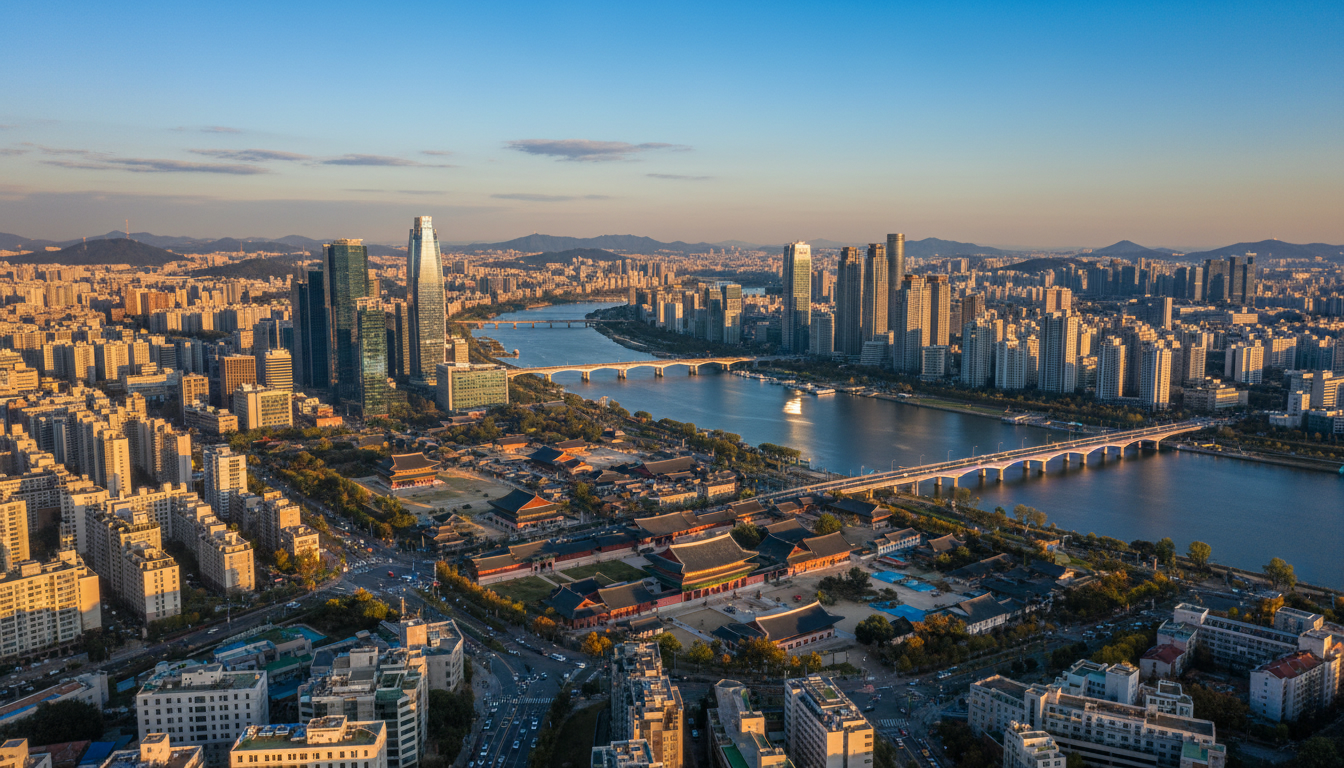
In short, what you'll discover in this article: The capital of South Korea is Seoul, a vibrant metropolis known as the country's political, economic, and cultural heart. Learn about Seoul’s location, history, key landmarks, and practical travel tips to get the most out of your visit.
1. Quick Answer — What Is the Capital of South Korea?
The capital city of South Korea is Seoul, officially known as Seoul Special Metropolitan City.
1.1 Official Name and Korean Form (서울) + Pronunciation
Seoul is written in Korean as 서울 and pronounced roughly as “Suh-ool.” It holds the status of a Special Metropolitan City, reflecting its importance.
2. Essential Facts About Seoul
2.1 Population, Area, and Timezone
Seoul is the largest city in South Korea with a population exceeding 9 million residents within its city limits. It covers an area of about 605 square kilometers.
The city operates on Korea Standard Time (KST), which is UTC+9.
2.2 Geographic Location and Coordinates (Embedded Map)
Located in the northwest part of South Korea, Seoul lies along the lower reaches of the Han River. Its coordinates are approximately 37.5665° N latitude and 126.9780° E longitude.

3. History and Evolution of Capital Status
3.1 Brief Timeline (Historical Capitals: Gyeongju, Gaegyeong → Seoul)
- Gyeongju served as the capital during the Silla Kingdom era (57 BC – 935 AD).
- Gaegyeong (modern-day Kaesong) was the capital during the Goryeo Dynasty (918–1392).
- Since 1394, Seoul has been the capital under the Joseon Dynasty and remains so today.
3.2 Reason for Choosing Seoul and Major Events
Seoul was chosen for its strategic location near the Han River, facilitating trade and defense. Over centuries, it has witnessed significant events including modernization during Japanese occupation, rapid post-war development, and hosting global events like the 1988 Summer Olympics.
4. Government and Administrative Organization
4.1 Where Are Key Institutions Located? (Presidency, National Assembly)
Seoul hosts South Korea’s main government institutions: the Blue House (Cheong Wa Dae), which is the presidential residence; the National Assembly building; and various ministries.
4.2 Distinction With Sejong — Role of Administrative Center Explained
While Seoul is the political and economic hub, Sejong City was established as an administrative capital to decentralize government functions. Sejong hosts many government agencies but Seoul remains the primary seat of power.
5. What to Visit in Seoul? Main Attractions
5.1 Palaces and Historic Monuments
- Gyeongbokgung Palace: The largest royal palace built during Joseon.
- Changdeokgung Palace: Known for its beautiful Secret Garden.
- Bukchon Hanok Village: Traditional Korean houses preserved amid urban surroundings.
5.2 Popular Districts (Myeongdong, Gangnam, Hongdae) and Museums
- Myeongdong: Famous for shopping and street food.
- Gangnam: Trendy area known for upscale shops and nightlife.
- Hongdae: Youthful vibe with art galleries and live music.
- Museums like the National Museum of Korea showcase rich cultural heritage.
6. Practical Information for Visitors
6.1 Airports, Public Transport, Subway System
Seoul is served by two major airports: Incheon International Airport (primary international gateway) and Gimpo Airport (domestic flights). The extensive subway network connects all major districts efficiently.
6.2 Visa Requirements, Safety, Currency, and Useful Languages
Visitors from many countries can enter South Korea visa-free for short stays; check specific requirements before traveling. Seoul is considered very safe for tourists.
The currency is South Korean Won (KRW), and while Korean is official, English signage is common in tourist areas.
7. For Residents/Expats — Daily Life and Business
7.1 Cost of Living, Recommended Neighborhoods, Administrative Procedures
Living costs in Seoul vary but are generally moderate compared to other global capitals. Popular expat neighborhoods include Itaewon and Apgujeong for their international communities.
Administrative tasks such as registration require visits to local district offices.
8. Reliable Sources and Data
8.1 Links to Official Statistics and Studies
For up-to-date statistics on Seoul’s population or economic data, consult official sources like Statistics Korea or the Korean Tourism Organization.
When planning your trip or stay in Seoul, consider exploring eSIM options for seamless mobile connectivity without roaming fees. You can compare top eSIM data plans on esim-korea.com to find affordable offers from providers like SK Telecom or KT with verified promo codes from MyBestSim.
For practical advice on obtaining an eSIM in South Korea or travel-specific eSIM plans tailored to visitors’ needs, check out these helpful guides on how to get eSIM in South Korea and South Korea travel eSIM.
9. Conclusion
Seoul stands as a dynamic capital blending rich history with modern innovation—truly the capital city of South Korea. Whether you’re curious about its role or planning a visit, understanding Seoul’s significance enhances your appreciation of this vibrant metropolis.
Explore more about staying connected during your trip by comparing eSIM plans through trusted platforms like MyBestSim to enjoy hassle-free mobile data throughout your stay in South Korea’s capital.
FAQ
What is the official name of South Korea's capital?
The official name of South Korea's capital is Seoul Special Metropolitan City, reflecting its status as a major political and economic center.
Where is Seoul located geographically in South Korea?
Seoul is situated in the northwest part of South Korea, along the lower reaches of the Han River, at approximately 37.5665° N latitude and 126.9780° E longitude.
Why was Seoul chosen as the capital city?
Seoul was selected for its strategic location near the Han River, which facilitated trade and defense, making it an ideal political and economic hub since 1394.
What are some must-see attractions in Seoul?
Key attractions include Gyeongbokgung Palace, Changdeokgung Palace with its Secret Garden, Bukchon Hanok Village, and vibrant districts like Myeongdong, Gangnam, and Hongdae.
How can visitors get around Seoul efficiently?
Visitors can use Seoul's extensive subway system connecting major districts, and the city is served by Incheon International Airport and Gimpo Airport for international and domestic flights.

Jiwon Park
Jiwon is a Seoul-based travel and technology writer who has tested eSIMs across South Korea and Asia. At Korea eSIM she compares travel data plans on SK Telecom, KT and LG U+ and helps visitors stay online affordably from Seoul to Jeju.