Ozly eSIM Plans for Short vs Long Stays in South Korea
9/17/2026
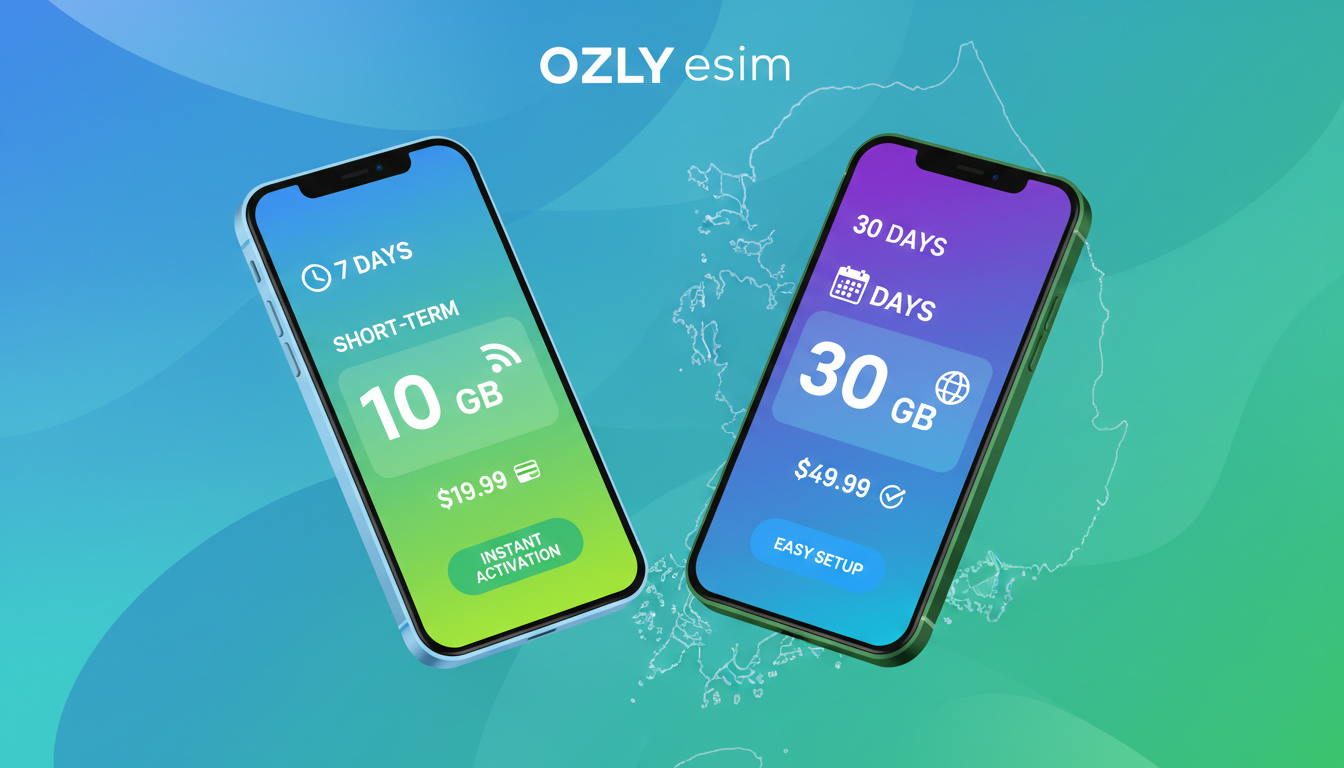
Comparing Ozly eSIM Data Plans for Short-Term and Long-Term Stays in South Korea
If you’re planning a trip to South Korea and considering the Ozly eSIM, understanding how plan duration impacts coverage, pricing, and activation convenience is crucial. Ozly eSIM offers instant setup and data access in over 200 destinations, including South Korea, but your choice between short-term and long-term plans will affect your experience significantly.
Here’s what you need to know to pick the best option for your stay.
How Plan Duration Affects Coverage and Pricing with Ozly eSIM
Ozly eSIM provides flexible data plans tailored to travelers’ varying lengths of stay. The key difference between short-term and long-term plans lies in how data allowances and pricing scale with duration.
Pricing Structure and Duration Impact
Ozly’s pricing model is straightforward: you pay for data-only plans without roaming surprises. However, the cost per day typically decreases as the plan duration increases, reflecting economies of scale in mobile data provisioning.
For example, while Ozly itself does not publish fixed prices on its site, comparable providers listed on MyBestSim show that short-term plans (1 to 7 days) often cost more per gigabyte than monthly plans. This is because short-term plans require rapid provisioning and higher network resource allocation per day.
- Short-term plans are ideal for stays under a week, offering quick activation and smaller data packages.
- Long-term plans provide better value per gigabyte for stays beyond two weeks or a month.
This pricing pattern aligns with GSMA specifications (SGP.22) governing remote eSIM provisioning, where longer validity periods allow operators to optimize network usage and reduce overhead costs.
Coverage Variations by Plan Duration
While Ozly claims coverage in over 200 destinations, including South Korea, the actual network quality depends on partnerships with local carriers. For short stays, Ozly typically connects users to major networks like SK Telecom or KT via roaming agreements.
These connections prioritize immediate access but may have bandwidth caps or speed throttling after certain thresholds.
In contrast, long-term plans often negotiate direct local profiles with carriers such as LG U+, offering more stable coverage and higher data speeds. This difference arises because longer contracts enable operators to allocate dedicated SIM profiles rather than relying solely on roaming.
I always start by checking which local networks an eSIM provider partners with for long-term plans since this directly affects signal reliability and speed during extended stays.
Activation Convenience: What Changes Between Short-Term and Long-Term Plans?
The activation process of an Ozly eSIM is designed to be seamless regardless of plan length, but some nuances affect user experience depending on your stay duration.
The Ozly eSIM Activation Process
Activation involves scanning a QR code or using the Ozly app for one-tap installation. This process complies with GSMA’s SGP.22 standard for remote provisioning, ensuring secure and fast setup without physical SIM swapping.
However, for short-term plans:
- The activation window is narrower; you must activate within a few days of purchase.
- Data packages are smaller, so monitoring usage closely is essential to avoid running out mid-trip.
For long-term plans:
- Activation can be scheduled ahead of arrival or remotely managed via the Ozly app.
- Plans often include rollover options or flexible top-ups to extend data validity without reinstalling the eSIM profile.
A common mistake travelers make is activating their eSIM too early before arrival in South Korea. Since some plans activate immediately upon installation, this can lead to wasted data if you’re not yet on-site.
I’d advise against activating an Ozly eSIM more than 24 hours before landing unless your plan explicitly supports delayed activation.
Device Compatibility Considerations
Ozly supports most modern devices compatible with eSIM technology, including iPhone models from XS onward and many Android phones running Android 10 or later. However, some older devices or carrier-locked phones may not support multiple simultaneous profiles or remote provisioning features required by Ozly.
For longer stays requiring multiple plan renewals or top-ups, device compatibility becomes even more critical because switching between profiles without deleting existing ones can be tricky on some models.
Choosing Between Short-Term and Long-Term Plans: Practical Examples
To illustrate how plan duration influences your choice with Ozly eSIM in South Korea, consider these scenarios:
Short-Term Stay: A Week in Seoul
If you’re visiting Seoul for just seven days:
- Opt for a short-term plan that offers around 3 GB of data.
- Expect prices similar to other providers offering 3 GB for 7 days at about $2.70 (e.g., LinkeSIM or 4S eSIM).
- Activation is instant via QR code; no physical SIM needed.
- Coverage relies mostly on roaming agreements with SK Telecom or KT networks.
- Monitor your usage carefully since exceeding your allowance might lead to throttled speeds or additional charges.
This approach suits travelers who want hassle-free setup without committing to a long contract and who primarily use data for navigation, messaging apps, and occasional streaming.
Long-Term Stay: A Month Living in Busan
For stays up to 30 days:
- Choose a monthly plan offering at least 3 GB of data or more.
- Prices from comparable providers range around $3.50 to $3.99 for 30-day packages (e.g., eSIM4Travel or JamboSim).
- Long-term plans often provide better network integration with local carriers like LG U+, resulting in more stable connections.
- You can manage your plan through the Ozly app with options for top-ups or rollover.
- Activation timing is more flexible; you can install before arrival but delay activation until you land.
In this case, the trade-off is paying slightly more upfront but gaining reliable coverage suitable for remote work or extended browsing sessions without interruptions.
Troubleshooting Common Issues With Ozly eSIM During Different Stay Durations
Regardless of your plan length, some technical issues may arise that affect connectivity:
Signal Drops Due to Network Switching
When traveling between urban centers like Seoul and rural areas such as Jeju Island, short-term roaming profiles may switch between multiple carriers automatically. This can cause brief signal drops or slower speeds due to handover delays between SK Telecom and KT networks.
For long-term users connected through dedicated local profiles, this switching is minimized because the SIM profile is provisioned directly by one carrier (often LG U+), reducing latency and improving stability.
Data Exhaustion Before Plan Expiry
Short-term travelers often underestimate daily data consumption rates. Since short-duration plans have smaller total allowances (e.g., 0.5–3 GB), hitting the cap early leads to throttled speeds or loss of connectivity until renewal.
Long-term users benefit from monitoring tools within the Ozly app that alert when usage approaches thresholds well before expiry dates. This proactive management helps avoid unexpected outages during extended stays.
I always recommend setting daily usage limits on your device when using short-term plans to prevent sudden disconnections caused by rapid data depletion.
The Benefits of Using Ozly eSIM Compared to Physical SIM Cards in South Korea
Choosing an Ozly eSIM over traditional physical SIM cards offers several advantages that become especially apparent depending on your stay duration:
- Instant activation without visiting retail stores saves time upon arrival.
- No need to swap physical cards, reducing risk of losing original SIMs.
- Multiple profiles stored simultaneously allow switching between countries without removing cards.
- Transparent pricing eliminates hidden roaming fees common with international physical SIMs.
- Remote management via app simplifies plan renewals during long stays.
These benefits apply equally whether you’re staying a few days or several weeks but become more valuable as trip length increases due to ease of top-ups and profile management.
If you want detailed guidance on how to install an Ozly eSIM specifically for South Korea trips, I recommend checking out this guide on installing an eSIM in South Korea which covers device compatibility and activation nuances relevant to your destination.
Customer Reviews of the Ozly eSIM Service: What Travelers Say
Customer feedback collected on platforms like Trustpilot highlights consistent praise for:
- Fast activation times—most users report setup within minutes.
- Reliable customer support responding promptly via chat or email.
- Competitive pricing compared with other travel eSIM providers.
However, some reviews note occasional connectivity fluctuations during short trips due to roaming network handoffs—a known limitation tied to short-duration plans rather than the service itself.
Longer-stay users appreciate the flexibility of managing multiple data passes through the app without needing physical SIM swaps every month.
These insights align well with MyBestSim’s ranking where providers offering longer validity periods generally score higher on user satisfaction due to better network integration and fewer interruptions.
Comparing Ozly With Other Providers for Your Stay Length in South Korea
While Ozly excels in instant setup across many destinations including South Korea, it’s worth comparing offers from other providers listed by MyBestSim if price sensitivity or specific coverage needs are priorities:
| Provider | MyBestSim Rank | Rating /5 | Promo Code | Discount |
|---|---|---|---|---|
| Roamic | 1 | 4.9 | MYBESTSIM | -10% unlimited |
| Yesim | 3 | 4.8 | MYBESTSIM20 | -20% unlimited |
| LinkeSIM | 4 | 4.5 | MYBESTSIM | -5% unlimited |
| JamboSim | 19 | 4 | MYBESTSIM | -15% unlimited |
This table shows that while Ozly offers convenience and broad coverage, other providers might offer better discounts or unlimited options depending on your travel style. For detailed comparisons tailored specifically to South Korea’s market conditions—including SK Telecom’s coverage maps—MyBestSim remains the go-to resource for travelers seeking optimal deals.
For a deeper dive into how different Korean carriers perform with various eSIMs during tourist visits, see my article about the best eSIM South Korea options.
By focusing on how plan duration influences pricing structures, network coverage quality, activation flexibility, and troubleshooting scenarios with Ozly eSIMs in South Korea, travelers can make informed choices tailored precisely to their trip length—whether a quick business trip or an extended cultural immersion.
FAQ
How does Ozly eSIM pricing differ for short-term plans?
Short-term Ozly eSIM plans usually cost more per gigabyte because they require rapid provisioning and higher daily network resources. These plans are ideal for stays under a week with smaller data packages and instant activation.
What network coverage can I expect with long-term Ozly plans?
Long-term Ozly eSIM plans often connect directly with local carriers like LG U+, providing more stable coverage and faster speeds. This is due to dedicated SIM profiles rather than relying on roaming agreements.
Can I activate my Ozly eSIM before arriving in South Korea?
Activation timing depends on your plan. Short-term plans require activation within days of purchase, while long-term plans allow scheduled or delayed activation via the Ozly app to avoid wasting data before arrival.
Which devices are compatible with Ozly eSIM for extended stays?
Ozly supports most modern eSIM-enabled devices, including iPhones XS and newer and Android phones running Android 10 or later. Compatibility is crucial for managing multiple profiles during long stays.
What are common connectivity issues with Ozly eSIM during travel?
Short-term users may experience signal drops due to roaming network switches between carriers like SK Telecom and KT. Data exhaustion is also common if usage isn’t monitored closely, leading to throttled speeds or outages.

Jiwon Park
Jiwon is a Seoul-based travel and technology writer who has tested eSIMs across South Korea and Asia. At Korea eSIM she compares travel data plans on SK Telecom, KT and LG U+ and helps visitors stay online affordably from Seoul to Jeju.