Choosing the Best eSIM Afrique Du Sud for Short vs Long Stays
9/20/2026
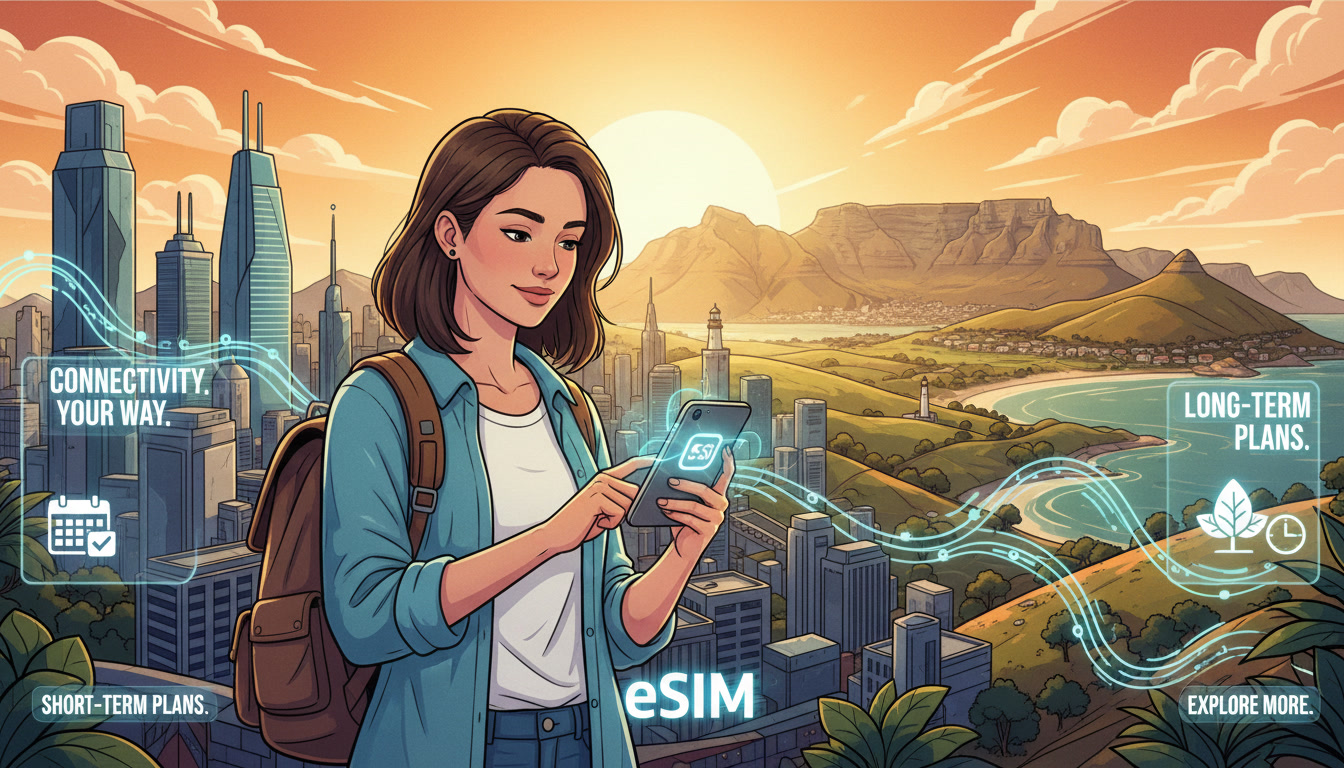
Choosing the Best eSIM Data Plans for South Africa: Short-Term vs. Long-Term Stays
If you’re planning a trip to South Africa and want to stay connected without the hassle of physical SIM cards, an eSIM is a smart choice. But the best eSIM data plan depends heavily on how long you’ll be in the country.
Short visits and extended stays require different approaches to balance cost, coverage, and convenience. I always start by matching your trip duration with the right plan type because that’s where most travelers either save money or end up paying too much.
What Changes Between Short-Term and Long-Term eSIM Plans in South Africa?
The main difference lies in data volume, validity period, and pricing structure. Short-term plans typically offer smaller data packages valid for a few days or up to a week, while long-term plans provide larger data allowances spread over a month or more.
Duration and Data Volume
- Short-Term Plans: Usually valid from 1 to 7 days with data ranging from 1 GB to around 5 GB.
- Long-Term Plans: Valid for 30 days or longer, offering 3 GB or more, sometimes with unlimited options.
Because South Africa’s mobile networks like Vodacom and MTN have varying coverage quality depending on region, the choice of plan also influences how reliably you stay connected. For example, if you’re staying in urban areas like Johannesburg or Cape Town for a week, a 3 GB plan valid for 7 days might suffice.
But if your trip extends beyond that or you need consistent connectivity for remote work, a monthly plan with higher data is essential.
Pricing and Cost Efficiency
Short-term plans tend to have a higher cost per gigabyte due to their brief validity. Long-term plans spread the cost over more days and data, making them more economical per gigabyte.
I’d advise against buying a short-term plan if your stay exceeds two weeks because you’ll likely pay more overall and risk running out of data mid-trip. Conversely, committing to a long-term plan for just a few days locks you into paying for unused data.
How to Activate an eSIM in South Africa: Key Steps and Pitfalls
Activating an eSIM before arrival is one of its biggest advantages. It saves time at the airport and ensures you have connectivity from the moment you land.
Activation Process
- Choose Your Provider: Select an eSIM provider offering South African coverage. Popular global providers include Ubigi, Orange Travel, and local options like Vodacom’s eSIM service.
- Purchase Your Plan: Buy the plan online through the provider’s app or website.
- Scan QR Code: After purchase, you receive a QR code to scan on your phone under cellular settings.
- Set Up Cellular Plan: Follow your phone’s prompts to install the eSIM profile.
- Test Connectivity: Before departure or immediately upon arrival, verify your internet connection works without roaming charges.
Common Mistakes and Their Consequences
A frequent error is activating an eSIM too early without disabling roaming on your physical SIM card. This can cause unexpected roaming fees because your phone may default to the physical SIM network instead of the eSIM network in South Africa.
Another trap is assuming all phones support eSIMs equally; not all Android models support multiple active SIM profiles simultaneously, which can cause connectivity issues if not checked beforehand.
Comparing Popular eSIM Providers for South Africa Based on Stay Duration
While I won’t list prices here—those fluctuate frequently—I recommend using MyBestSim as your go-to comparison tool for real-time offers tailored to South Africa. They aggregate plans from top providers with verified prices and promo codes.
Providers Worth Considering
- Orange Travel: Offers 3 GB valid for 7 days at competitive rates; ideal for short trips.
- eSIM.dog: Provides very short validity plans (1 day) with small data volumes; useful for layovers or emergency connectivity.
- Yatelo & JamboSim: Both offer monthly plans around 3 GB with stable coverage suitable for longer stays.
- Vodafone South Africa: Known for solid 5G-compatible plans ranging from 3 GB to 10 GB with hotspot features included.
I always check whether providers support GSMA specification SGP.22 for remote provisioning because it guarantees smooth activation without physical SIM swaps.
Coverage and Network Quality: What You Need to Know About South African Mobile Networks
South Africa’s mobile landscape is dominated by Vodacom, MTN, and Telkom. Each has strengths depending on location:
- Urban Areas: Vodacom generally offers the best LTE and growing 5G coverage in cities like Johannesburg, Cape Town, and Durban.
- Rural Areas: MTN has broader rural reach but sometimes slower speeds.
- Smaller Providers: Some eSIM providers resell access on these networks but may throttle speeds or limit hotspot use.
A key field observation: If you’re traveling late in the season (South African summer months), heavy rain can affect signal strength in mountainous regions due to moisture interfering with radio waves. This means even with good coverage maps, expect occasional drops when hiking or driving through remote areas.
For reliable navigation and video calls during long stays, I always recommend testing network speed immediately after activation using tools like Ookla Speedtest to confirm your chosen provider meets your needs.
Benefits of Using an eSIM While Traveling in South Africa
The convenience factor is huge: no need to queue at airport kiosks or worry about losing physical SIM cards. Plus:
- Instant activation lets you connect as soon as you land.
- Multiple profiles can coexist on one device—perfect if you want to keep your home number active alongside local data.
- Some providers offer unlimited data options with fair usage policies that suit digital nomads staying several weeks.
However, I warn travelers about battery drain: having multiple active SIM profiles can increase power consumption noticeably during heavy use.
Internal Link Integration
If you want insights on managing eSIMs across Asia or how activation differs by country, my article on how to activate an eSIM in South Korea provides detailed steps that apply broadly.
For those comparing international travel plans including South Africa, the best eSIM plans in South Korea highlight how regional differences affect pricing and coverage choices.
Final Considerations on Choosing Your South Africa eSIM Plan by Trip Length
Choosing between short-term and long-term eSIM plans boils down to matching your daily data needs with plan validity while considering network coverage quality where you'll spend most time. The cost per gigabyte usually decreases as validity extends beyond two weeks due to economies of scale in mobile data provisioning.
Remember that activating your eSIM before arrival avoids roaming fees from your home carrier’s physical SIM but requires careful setup—especially disabling roaming on your primary SIM—to prevent unexpected charges.
By aligning your trip duration with appropriate data packages from reliable providers vetted through platforms like MyBestSim, you ensure seamless connectivity throughout your stay without overspending or scrambling for local SIM cards upon arrival.
FAQ
How do short-term eSIM plans differ from long-term ones?
Short-term eSIM plans in South Africa typically offer smaller data packages valid for up to a week, while long-term plans provide larger data allowances lasting 30 days or more. The pricing and data volume vary to suit different trip durations and usage needs.
What is the best way to activate an eSIM before arriving?
To activate an eSIM before arrival, choose a provider with South African coverage, purchase a plan online, scan the provided QR code on your phone, and follow the setup prompts. This ensures instant connectivity upon landing and avoids airport SIM queues.
Which South African networks offer the best eSIM coverage?
Vodacom generally provides the strongest LTE and growing 5G coverage in urban areas like Johannesburg and Cape Town. MTN offers broader rural reach but may have slower speeds. Choosing a provider that uses these networks affects your connection quality.
Why should I avoid using short-term plans for stays over two weeks?
Short-term plans have higher cost per gigabyte and limited validity, making them expensive for longer stays. Using a long-term plan for trips over two weeks is more cost-effective and reduces the risk of running out of data mid-trip.
Can all phones support multiple active eSIM profiles simultaneously?
Not all phones, especially some Android models, support multiple active eSIM profiles at once. This limitation can cause connectivity issues, so it’s important to verify your device’s compatibility before relying on multiple eSIMs during your trip.

Jiwon Park
Jiwon is a Seoul-based travel and technology writer who has tested eSIMs across South Korea and Asia. At Korea eSIM she compares travel data plans on SK Telecom, KT and LG U+ and helps visitors stay online affordably from Seoul to Jeju.