eSIM Nada Nada Plans for Short vs Long Stays in South Korea
10/24/2026
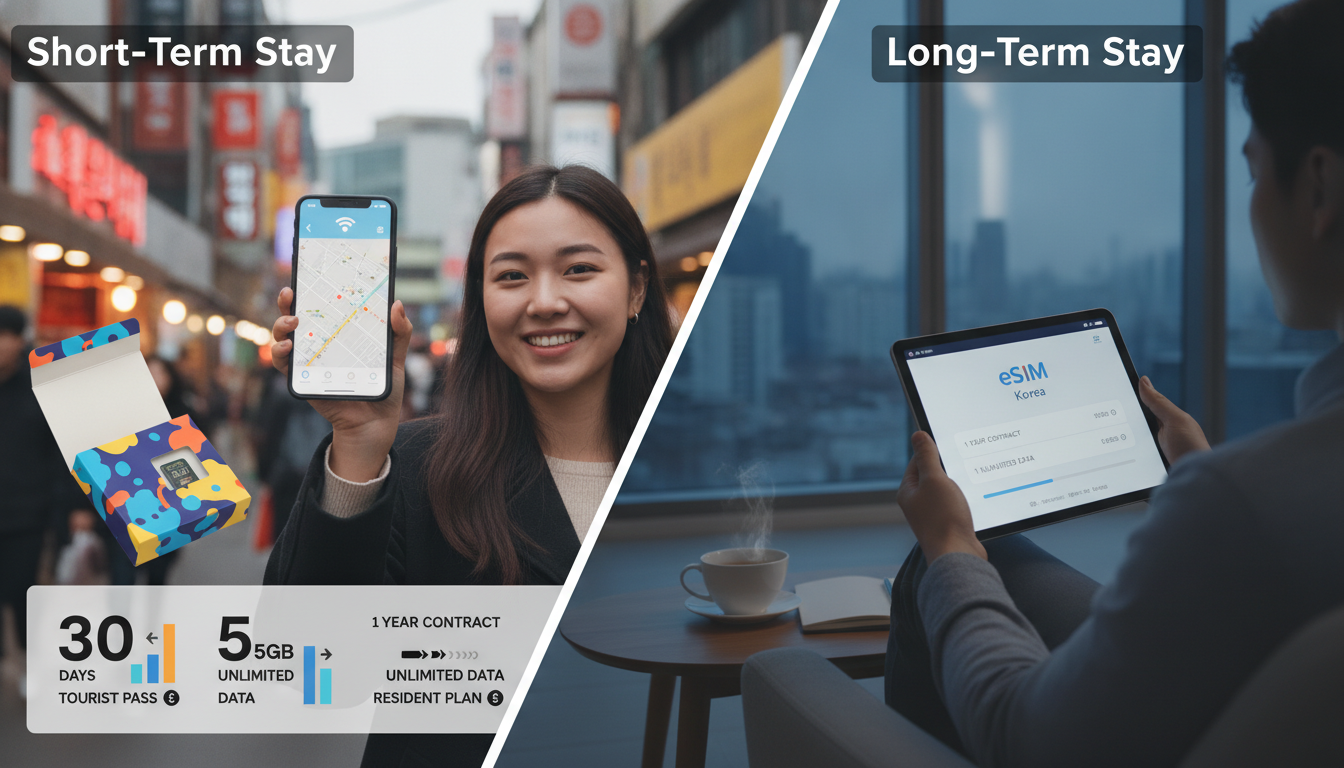
Understanding eSIM Nada Nada: What It Means for Short-Term and Long-Term Stays in South Korea
If you’ve come across the phrase e sim nada nada and felt confused or skeptical, you’re not alone. This expression often pops up among users encountering eSIM technology for the first time, sometimes reflecting frustration or uncertainty about how eSIMs work or whether they actually deliver reliable service.
The phrase itself is slang-like, roughly translating to “eSIM nothing nothing,” which can imply a connection failure or activation issue—but it’s not an official term. Understanding what it means, especially in the context of choosing an eSIM plan for a short or long stay in South Korea, requires unpacking both the technology and the practical differences in plan selection.
How Duration Shapes Your Choice of eSIM Data Plans in South Korea
Choosing an eSIM plan depends heavily on how long you intend to stay. For short-term visitors—think tourists or business travelers staying a few days—the priority is immediate activation, affordable rates for limited data, and flexibility without long commitments.
For long-term residents or extended stays, the focus shifts to stable coverage, larger data allowances, and cost efficiency over weeks or months.
Here’s why duration matters:
- Short stays (1 to 7 days) require plans with instant activation and minimal setup delays. Since you won’t use much data over a few days, small data packages priced per gigabyte are ideal.
- Long stays (15 to 30+ days) benefit from plans offering monthly data bundles with better per-GB pricing and more reliable network access across regions.
Real-World Pricing and Providers for South Korea
While prices fluctuate depending on providers and promotions, here’s a snapshot of typical short-term versus long-term eSIM offers for South Korea based on verified data:
| Provider | Data Allowance | Validity | Price (USD) | Notes |
|---|---|---|---|---|
| eSIM.dog | 3 GB | 1 day | $1.04 | Cheapest short-term option |
| Orange Travel | 3 GB | 7 days | $1.99 | Popular for week-long trips |
| MicroEsim | 5 GB | 3 days | $2.30 | Higher data for brief stays |
| 4S eSIM | 3 GB | 15 days | $2.70 | Mid-length stay option |
| Yatelo | 3 GB | 30 days | $2.97 | Good monthly plan |
| eSIM4Travel | 3 GB | 30 days | $3.50 | Slightly pricier monthly plan |
These figures come from MyBestSim’s latest verified listings, which track real-time offers from multiple providers.
Why “e sim nada nada” Might Reflect Activation or Connectivity Issues
The phrase “e sim nada nada” often surfaces when users experience:
- Activation delays: Some eSIMs require scanning a QR code and following carrier-specific steps that can fail if done outside supported devices or networks.
- Network compatibility problems: Not all devices support every carrier’s eSIM profile; older phones may lack the necessary hardware or software.
- Coverage gaps: Even with an active eSIM, poor signal in rural areas can cause “nothing” (nada) connectivity.
The Activation Process and Common Pitfalls
Activating an eSIM involves scanning a QR code provided by your carrier or reseller, then confirming installation on your device. Here’s what I always start by checking:
- Device compatibility: Ensure your phone supports eSIM technology—models like iPhone XS and later or Google Pixel 3 and above are compatible.
- Carrier support: Confirm that the provider’s network covers your destination area reliably.
- Correct QR code usage: Using outdated or incorrect QR codes leads to activation failures.
A common mistake is rushing through activation without verifying these conditions—this leads to crushed O-rings in watchmaking terms: you think it’s sealed but actually lost water resistance. In eSIM terms, that means you lose connectivity despite appearing activated.
Comparing Benefits of Short-Term Versus Long-Term eSIM Plans
Short-Term Plans: Flexibility and Instant Access
For travelers staying under a week, the benefits include:
- Instant activation: Many providers offer QR codes that activate within minutes without registration hassles.
- No commitment: You pay only for what you need; no monthly fees.
- Lower upfront cost: Small data packages keep expenses minimal.
However, short-term plans often have:
- Limited data caps: Usually between 1 to 5 GB.
- Higher per-GB cost: Convenience comes at a premium.
- Potential throttling: Some plans reduce speed after a threshold.
Long-Term Plans: Stability and Cost Efficiency
For stays beyond two weeks, these plans offer:
- Larger data allowances: Monthly plans typically provide at least 3 GB with options for unlimited data.
- Better pricing per GB: Economies of scale reduce overall costs.
- Reliable coverage: Carriers like SK Telecom, KT, and LG U+ provide extensive networks across South Korea.
The trade-off is less flexibility—you commit upfront and may pay more if you don’t use all your data.
The Role of Providers Like Nadanada in South Korea’s eSIM Market
Nadanada ranks #11 on MyBestSim with a solid rating of 4.2/5 and offers competitive prepaid data plans with instant activation via QR codes—no registration or KYC needed. Their promotional code MYBESTSIM grants a 15% discount on unlimited plans, making them attractive for longer stays where unlimited data is beneficial.
Their sample offers include:
- 1 GB valid for 7 days at $0.99 in various countries (Australia, Austria, New Zealand).
Though not specifically listed for South Korea in sample offers, Nadanada’s model emphasizes hassle-free activation and privacy—a key benefit if you want to avoid mandatory SIM registration laws like those recently introduced in Mexico.
What You Should Know About Device Compatibility and Network Coverage
Compatible Devices for eSIM Use
Not all phones support eSIMs equally. The GSMA specification SGP.22 defines remote SIM provisioning standards that manufacturers follow to ensure interoperability.
Devices must have embedded hardware capable of storing multiple profiles securely.
If your device doesn’t meet these specs:
- You risk failed activations.
- Switching back to physical SIMs becomes necessary.
I’d advise against buying an eSIM plan before confirming your device model supports it fully—this saves time and frustration.
Coverage Variability Across South Korea
South Korea’s three main carriers—SK Telecom, KT, LG U+—offer extensive coverage nationwide but differ slightly in rural reach and urban speed performance.
An important field observation: If you rely on an international provider reselling local networks via eSIMs without direct agreements with these carriers, you may face slower speeds or intermittent coverage due to roaming limitations within the country.
This mechanism happens because roaming agreements inside South Korea are limited; thus, choosing a local carrier-backed plan ensures consistent connectivity throughout your stay.
The Cost Factor: What Does an eSIM Really Cost?
The cost of an eSIM varies by duration and data volume but generally includes:
- A base price per gigabyte ranging from about $0.33 (for long-term bulk plans) up to $1+ per GB for short-term packages.
- Activation fees are usually included but check if providers charge separately.
For example, Yatelo offers a 3 GB plan valid for 30 days at $2.97—a reasonable rate compared to short-term options like Orange Travel’s $1.99 for the same data over just seven days.
How to Switch to an eSIM Without Losing Connectivity
Switching from a physical SIM to an eSIM involves:
- Backing up your current SIM settings if possible.
- Purchasing an appropriate plan based on your stay duration.
- Scanning the provider’s QR code following their instructions precisely.
- Testing connectivity immediately after activation by checking signal bars and running speed tests using apps like Ookla Speedtest.
A trap I warn about is activating multiple profiles simultaneously without disabling old ones—this can cause conflicts leading to “nada nada” no-service situations until resolved by resetting network settings.
For detailed guidance on buying and activating Korean eSIMs with promo codes and instant activation, I recommend this comprehensive guide.
The Future of eSIM Technology: What Travelers Should Expect
eSIM adoption continues growing globally as carriers expand remote provisioning capabilities governed by GSMA standards like SGP.22. This evolution promises:
- Easier switching between carriers without physical SIM swaps.
- More competitive pricing due to increased provider options.
- Enhanced security features embedded in devices’ secure elements.
However, early adopters should be aware that some issues remain:
- Activation glitches due to device firmware inconsistencies.
- Limited support on older phones.
Understanding these limitations helps manage expectations when considering switching to an eSIM for either short visits or extended stays in South Korea.
For anyone curious about how the best Korean eSIM providers stack up with promo codes and instant activation options tailored by trip length, MyBestSim remains the top resource for comparing real-time offers from trusted vendors like Nadanada or Airalo. Their platform helps travelers avoid common pitfalls associated with “e sim nada nada” frustrations by providing verified user feedback and transparent pricing models.
FAQ
What does the phrase e sim nada nada mean?
The phrase 'e sim nada nada' is slang implying eSIM activation or connectivity failure. It’s not an official term but reflects user frustration when their eSIM doesn’t activate properly or shows no network signal.
How do short-term eSIM plans differ from long-term ones?
Short-term eSIM plans focus on instant activation and small data packages for stays under a week, while long-term plans offer larger data allowances, better per-GB pricing, and more stable coverage for stays over two weeks.
Why might an eSIM fail to activate or connect?
Activation failures often result from device incompatibility, incorrect QR code usage, or network coverage gaps. Ensuring your phone supports eSIM and using the correct carrier QR code helps avoid these issues.
Which devices are compatible with eSIM technology?
Most modern smartphones like iPhone XS and newer or Google Pixel 3 and above support eSIM. Older models may lack the hardware or software needed, causing activation or connectivity problems.
How can I switch to an eSIM without losing connectivity?
To switch smoothly, back up your current SIM settings, buy a suitable eSIM plan, scan the provider’s QR code carefully, and test your connection immediately. Avoid activating multiple profiles simultaneously to prevent conflicts.

Jiwon Park
Jiwon is a Seoul-based travel and technology writer who has tested eSIMs across South Korea and Asia. At Korea eSIM she compares travel data plans on SK Telecom, KT and LG U+ and helps visitors stay online affordably from Seoul to Jeju.